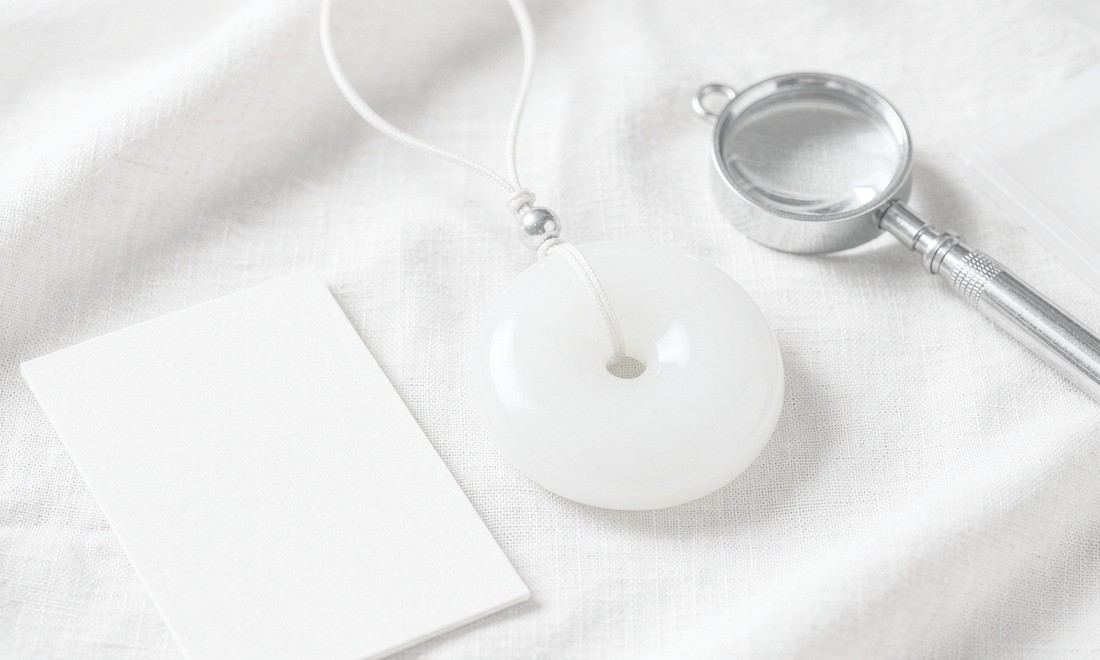
Genuine jade is valuable, so the market is full of treated, dyed and outright fake material - glass, serpentine, quartz, even plastic. You do not need a lab to spot the obvious fakes, but you do need a certificate to be certain. Here is a practical order of operations.
1. The simple at-home checks
Temperature. Real nephrite feels cool to the touch and warms slowly. Glass and plastic warm up fast.
Weight. Nephrite is dense. A bead that feels too light for its size is a warning.
Surface. Real jade has a fine, even, waxy luster. Dyed or coated pieces often show colour pooled in cracks or an uneven, glassy shine.
Sound. Two pieces of solid nephrite tapped together give a deep, resonant "click," not a sharp glassy ring. (Do not try this with a finished bracelet you do not own.)
2. What "treatment" means
Even real nephrite can be altered: waxing to improve shine is common and accepted; dyeing, bleaching or polymer filling is not, and must be disclosed. At JadeHotan we sell untreated nephrite only - no dye, no bleach, no glass imitation.
3. The test that settles it: the certificate
Home tests narrow the field; they do not prove anything. The only reliable answer is a national gemological certificate that names the material as natural nephrite and states "no treatment." Every JadeHotan jade piece ships with one, and you can re-check it at any authorized institution. If an authorized re-check disagrees with our certificate, we issue a full refund and cover the re-check fee.